

A new bathroom finish does not resolve every moisture problem. If the room regularly stays damp after bathing, discuss ventilation as part of the refit before the walls and ceiling are finished.
Describe what stays damp and when
Before the refit discussion, note what happens after bathing: mist on the mirror, wet walls or a patch that stays marked long after the room is unused. Explain whether the problem appears elsewhere and whether it changes with the season. Photographs can help show the position, but they do not diagnose the cause. A new surface should not simply cover unexplained damage. Ask what needs further checking so any repair and ventilation discussion deals with the actual room rather than assume every mark has the same cause.
Look at the fan and the route together
A visible grille does not prove that the fan and its route are suitable or working as intended. Ask where the damp air is taken and what needs checking when the room layout changes. In a flat, mention known shared parts of the building rather than assume a new route can be made anywhere. Have the proposed arrangement assessed by the appropriate professional. The homeowner's role is to explain the existing room and understand the proposed work, not to open the fan or design a new duct route.
Choose the operation you can understand
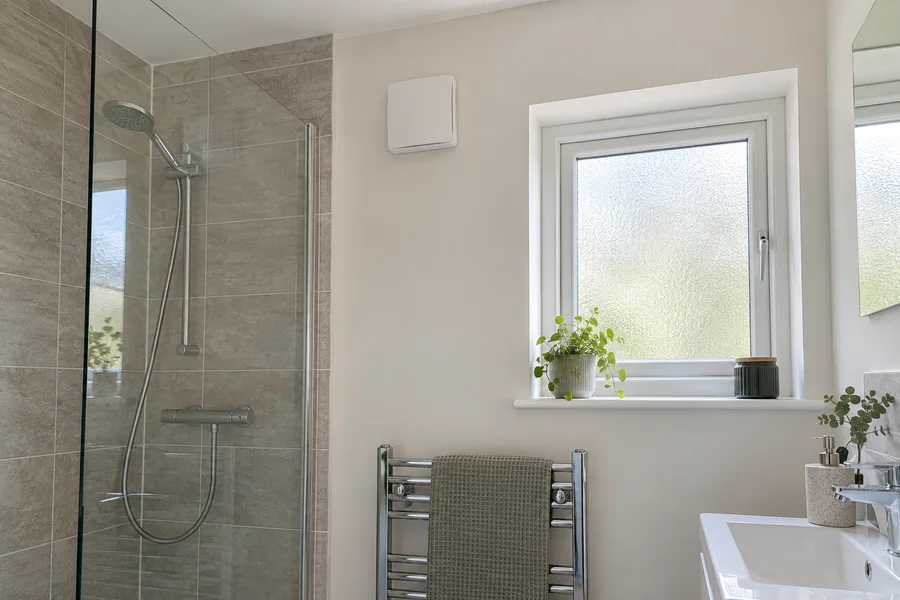
Find out what switches the proposed fan on and how it stops. The controls may be connected with other parts of the bathroom arrangement, so discuss them alongside the lighting and shower routine. Explain any control you struggle to use now. Ask for the actual product's operation rather than rely on a feature name in a brochure. At handover, the household should know what to do after bathing and which instructions to follow. Electrical products and alterations need suitability checks and installation by the appropriate professional.
Discuss noise with the rooms next door
Tell the installer whether the bathroom is used early, late or beside a bedroom where someone may be asleep. Explain what you find disturbing about the existing fan instead of asking for an undefined silent product. Ask about the selected model and how the proposed installation affects operation. Noise is one part of choosing a suitable arrangement, alongside removing damp air. With an en-suite, use our en-suite planning guide to consider the door, bedroom and bathroom together rather than treat the fan as an isolated purchase.
Show the proposed bath, screen and furniture
Give the installer the current room layout, including a shower enclosure, cupboards and window. New furniture can change access to the fan or sit where a route needs to be checked. Decide these positions before the ceiling and final wall finish are agreed. You do not need to work out technical requirements yourself. Ask for a clear explanation of the proposal for that layout and any further checks needed. A general product photograph cannot confirm the right fan or position for the actual room and building.
Set out the work and surrounding repairs
Ask the quote to identify the selected fan and controls, any agreed changes to its route and work around the ceiling or walls. If something needs investigating before a price can be confirmed, keep that separate from work already included. Through our bathroom installation service, we discuss ventilation alongside the proposed suite and fitting work. That helps you see what is part of the job, including the fan, the work to fit it and the surrounding walls or ceiling.
Keep routine cleaning possible
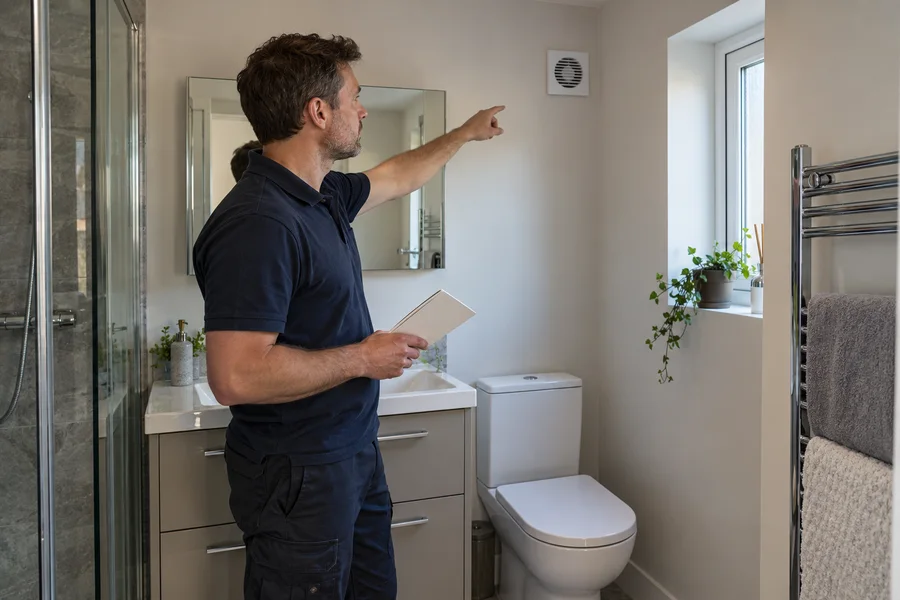
Check which accessible parts the product instructions say to clean and how to reach them safely. A tall cupboard or shelf should not make that access unnecessarily awkward. Keep the model number and instructions with the bathroom documents rather than discard them with the packaging. Follow the stated routine and avoid taking electrical parts apart if the operation changes. Ask who to contact about a question with the installation. Care is easier when you know the actual product and can explain the problem without guessing which model was fitted.
Check the completed operation at handover
Ask for the agreed controls to be demonstrated, including what the fan does when you operate the relevant switch. Compare that with the proposal and raise anything that is different. Keep any outstanding question with the completion notes. Our guide to the bathroom fitting stages explains the handover alongside the other final checks. This is a chance to learn the room's intended use, rather than assume that seeing a new grille is the same as knowing the ventilation has been checked and explained.
Notice changes after you start using the room
Keep the ordinary routine explained at handover and follow the care information. If the room continues to stay damp or a new noise appears, note when it happens and contact the appropriate installer rather than cover the mark or alter controls yourself. Mention whether the fan is operating and whether anything else has changed. Those observations can help the next check but are not a diagnosis. A refit should leave you with clear information about the selected arrangement and a practical way to raise a concern afterwards.
Your checklist
- Explain existing moisture concerns
- Check where the fan takes damp air
- Understand controls and noise
- Keep maintenance instructions and access