
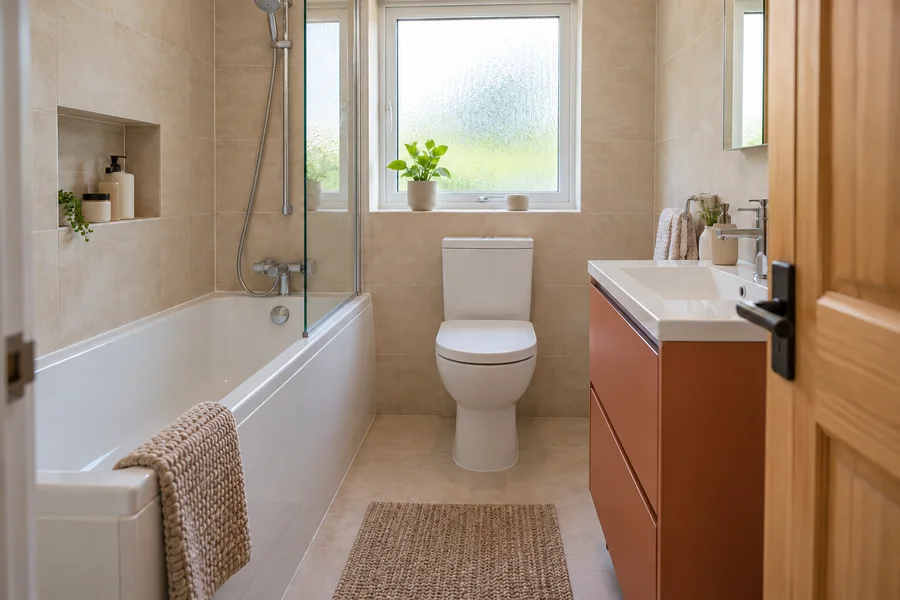
Knowing the order of work makes bathroom fitting easier to plan around. Every room is different, so use these stages to discuss the job rather than treating them as a fixed timetable.
Confirm the job before the start date
The agreed layout and quote should identify the selected products, preparation and fitting work. Check who supplies each item and when it needs to be ready. Explain whether this is your only bathroom and how products reach the room. These facts shape the job before removal begins. Our bathroom installation service brings the suite and fitting into one proposal, with the work set out for your home. Keep that accepted version available so the fitting starts from the same current plan everyone has agreed.
Check deliveries before removal begins
Agree who checks that delivered items are the right model, size and finish, and that essential parts are present. A carton arriving does not prove the correct product is inside. Report visible damage through the agreed contact and keep packaging as required by the supplier. Ask which products need to be ready before the old suite is taken out. If you supply an item, provide its actual details early enough for suitability to be checked, rather than assume the fitter can adapt any replacement on the day.
Prepare the route and remove the old fittings
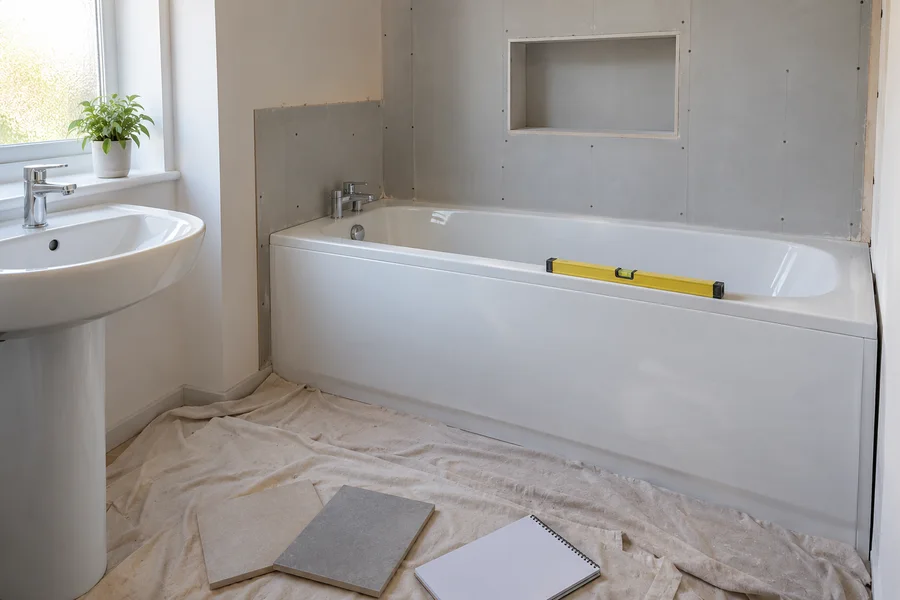
Before work starts, clear the agreed rooms and route for materials. Confirm the protection of nearby floors and where old fittings will wait for removal. The suite and finishes are then removed as set out in the job. That can reveal a damaged floor, loose wall surface or pipe route that was not visible earlier. Ask to be shown any problem and have the repair, price and effect on dates explained before extra work is approved. Our home preparation guide helps with these practical arrangements.
Set out pipes, wiring and ventilation
The new product positions need to work with the proposed plumbing, drains and any electrical or ventilation work. The exact order depends on the room and fittings; this is not a sequence for a homeowner to carry out. Confirm the actual shower, mirror and furniture before the relevant preparation is completed. A last-minute model change can alter connections or fixing positions. Ask when choices must be final and who needs the product information, particularly where a shower shelf or accessory needs preparation behind the finished wall.
Prepare and finish the walls and floor
The agreed surfaces are made suitable for the chosen finish before the final fittings are completed. Different materials and products may need particular drying, setting or preparation stages, so a quiet period does not necessarily mean the job has stopped. Ask how these stages affect use of the room. Keep any planned change to a wall pattern or covered area clear before the material is fitted. The bathroom quote guide explains why surface coverage and preparation belong in the original price rather than remain undefined.
Fit the suite and the smaller accessories
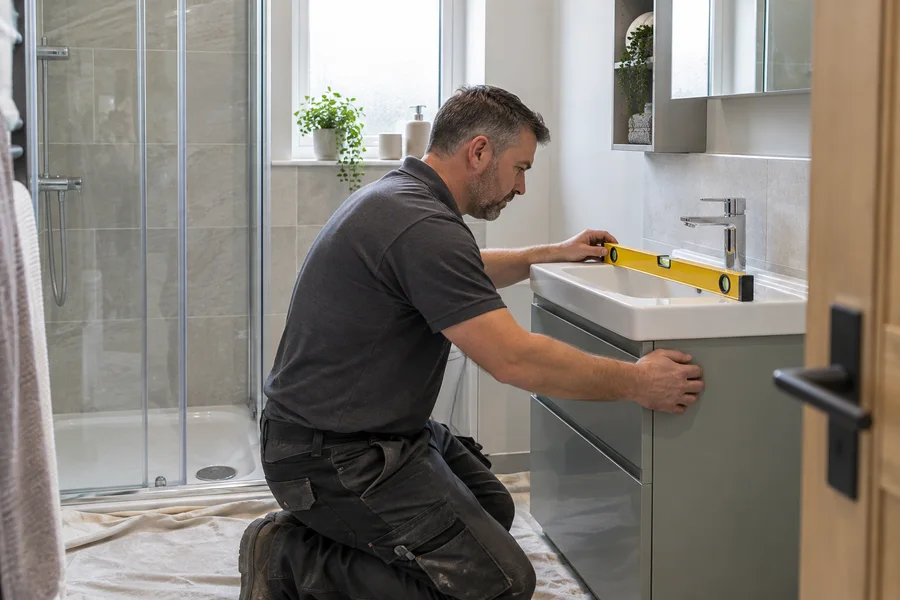
The bath or shower, basin, toilet, furniture and other agreed fittings are installed in the prepared room. The position of a towel rail or mirror should already be understood, but it is useful to confirm the small details before fixings are made. Check how drawers and the screen open alongside one another. Product instructions and the actual installation determine how the parts fit together. Do not assume a similar item can be substituted without checking its size, connections and effect on the surrounding finish first.
Manage interruptions while work is in progress
Ask when the toilet, water and washing facilities may be unavailable, because those interruptions can happen at different points. Make household arrangements from the actual schedule, not a general promise about how long a bathroom takes. Keep a contact available for questions that need a decision, particularly if you will be away during the day. If repair work or a delivery problem changes the plan, ask for the current position. That helps the household adjust without relying on yesterday's expected point of completion.
Use the handover to learn the controls
Walk through operation of the shower, screen, lighting and other agreed fittings. Ask when the bath or shower can be used where materials need time before getting wet. Learn where the access panels and valves are, without removing or adjusting parts yourself. Check that cupboard doors and drawers work as expected. The handover is also a useful time to ask about cleaning a particular finish. Understanding those controls and care instructions helps you use the completed bathroom as intended rather than guess from its appearance.
Keep a record of completion and follow-up
Compare the completed room with the agreed work and note any outstanding item with its next step. Keep the product references, care instructions and documents supplied for the job together. Record the contact for questions about the installation and distinguish that from a manufacturer's product enquiry. If you later notice a problem, explain which fitting is affected and what happens when it is used. A clear record makes that conversation easier. The final check should leave you knowing what is complete, what still needs attention and how to raise it.
Your checklist
- Products and responsibilities agreed
- Only-bathroom arrangements discussed
- Changes approved before extra work
- Controls, care and outstanding items reviewed