
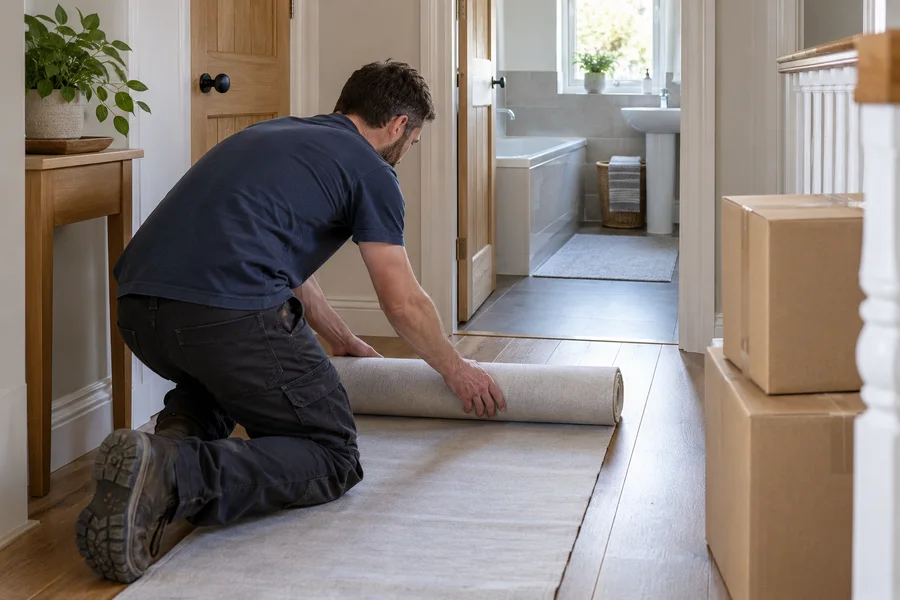
A little preparation makes it easier to live around bathroom work. Once the work and dates are agreed, use this checklist with your fitter to clarify the practical arrangements.
Settle access and the start arrangements
Confirm who will be home, how entry is arranged and which route will be used for materials. Explain parking restrictions, stairs and shared entrances before the start date. If another person is letting the fitter in, make sure they know the agreed plan and contact. The route may pass a home office or a room needed by children during the day. Discuss those ordinary uses so the household understands which areas must stay clear instead of planning only around the bathroom doorway and discovering the conflict on the morning of fitting.
Give deliveries a suitable place
Agree who receives the selected products, checks them for damage or missing parts and deals with an incorrect item. Packaging makes large fittings bulkier than their installed outline. A bath or panel may fit the room but still need its route through stairs and narrow turns checked. Choose a storage place that does not block exits or daily movement, and follow supplier instructions about conditions and packaging. Keep unexamined cartons available for the agreed checks rather than unpacking and discarding everything before the fitter has the product information needed.
Clear the bathroom without losing daily essentials
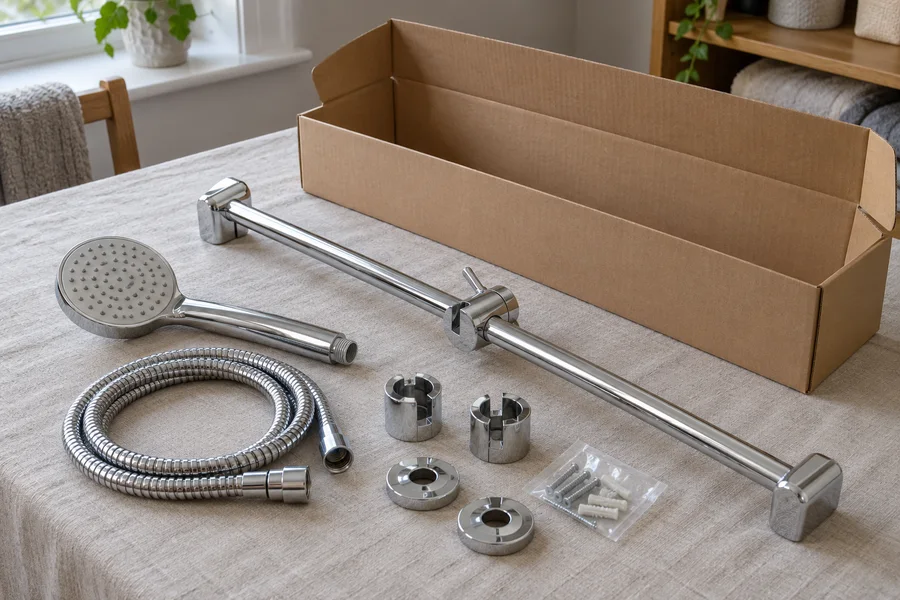
Remove towels, toiletries and movable belongings from the agreed work areas. Before packing everything away, set aside what the household will need during fitting. Keep those items somewhere convenient outside the work route, with medicines and cleaning products stored suitably. If another bathroom is available, do not fill its floor with boxes. Ask what adjacent cupboards or rooms also need clearing. A practical preparation list should name those places, because repeatedly stepping into the work area for forgotten items can undo the benefit of clearing the bathroom in the first place.
Agree the protection of nearby rooms
Talk through the floors and corners along the carrying route, and identify furniture or belongings that need moving. Ask which protection is included and what you should clear yourself. Explain arrangements for pets and children so ordinary household movement can stay separate from the work. Avoid covering the route with your own loose materials on the assumption they will help. Through our bathroom installation service, we discuss these practical arrangements with the agreed fitting work, so the preparation matches what is actually happening in your home.
Plan for water and toilet interruptions
Ask which facilities may be unavailable and at what stages. A toilet, basin and shower may be affected differently, so saying that you have another bathroom does not explain whether everyone can use it. Discuss any particular household need early and make suitable arrangements from the actual information supplied. Our bathroom fitting sequence guide explains why removal, preparation and final use are different stages. Do not assume a facility can be restored at the same point every day without agreeing that arrangement for your job.
Keep the latest decisions easy to find
Put the accepted quote, room layout, product references and contact details in one folder or email thread. Date an update so the current choice is obvious. Decide who can approve a product change or extra work and make sure the person managing the installation knows. Use our bathroom cost and quotation guide to check the inclusions before work starts. A household member at home should know which decisions have already been agreed, rather than unintentionally give instructions that conflict with the accepted product list.
Make room for removal and packaging
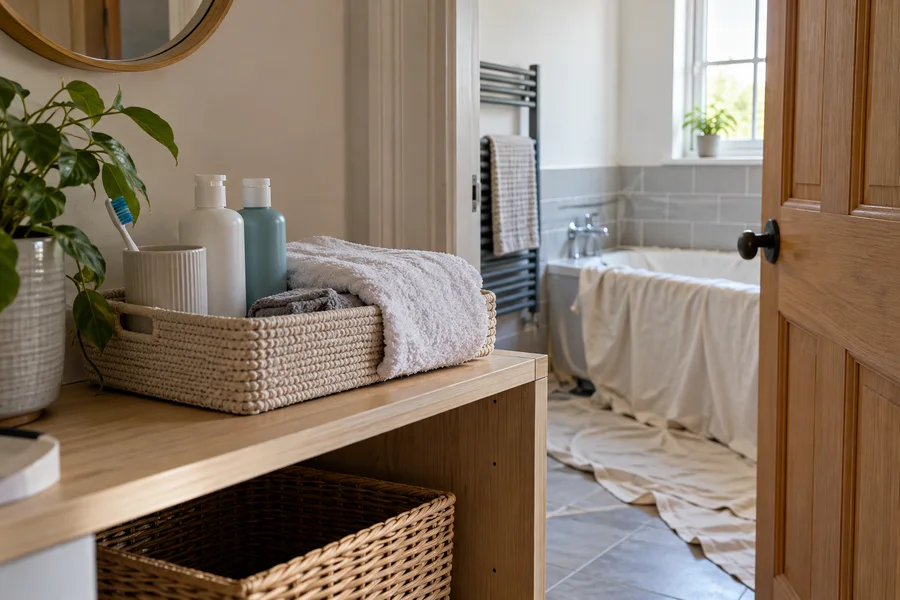
Old fittings and empty cartons need somewhere suitable to wait before they are taken away. Confirm who removes them, where they can be placed and any collection arrangements. Keep shared stairs, entrances and everyday routes clear rather than treat an unused corner of a landing as storage. Do not discard new packaging until damage checks and supplier requirements are dealt with. Having the responsibility written into the job makes it easier to prepare the home and avoids a growing pile of materials taking over the space you planned to use during fitting.
Stay available for questions during the work
Leave a practical contact and explain when you may be difficult to reach. A hidden repair or unavailable product can need a decision about price, work or dates. Ask for those effects before agreeing a change, and keep the answer with the current quote. A daily conversation can help you understand progress, but do not assume a stage is complete or enter the work area without checking. Work, setting times and deliveries vary, so household plans need the current position rather than a fixed expectation based on a different bathroom job.
Prepare for the final walk-through
As fitting progresses, note the things you want explained: shower controls, removable access panels, cupboard operation or care of a particular finish. Compare the completed work with the agreed job and record anything outstanding with its next step. Ask when the bath and shower can be used, then follow the instructions where materials need time before getting wet. Save the product details and contact for later questions. The aim is to finish with a bathroom you understand how to use and look after, not only a room that appears complete.
Your checklist
- Confirm parking and delivery access
- Clear room and protect household routines
- Agree use of essential facilities
- Keep written decisions and handover notes