
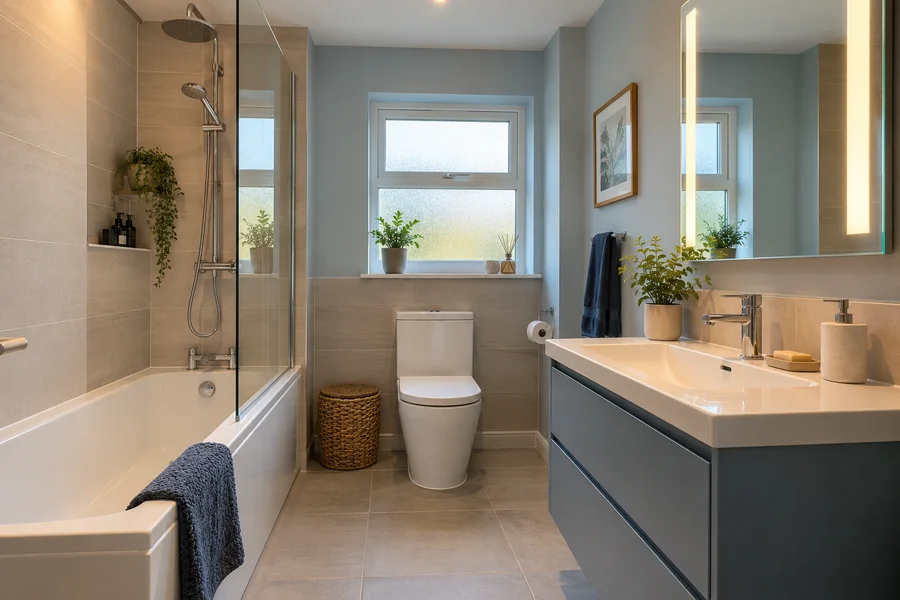
Lighting changes how a bathroom feels, but it also helps with ordinary tasks. List where you need light before finalising the mirror, storage and ceiling finishes.
List what you need to see
Think about washing, shaving, applying make-up, opening drawers and cleaning the shower. Each task happens in a particular place. Note where the present light leaves your face or the cupboard in shadow rather than ask only for a brighter ceiling. Explain whether people of different heights share the room. These observations give the professional a practical starting point for suitable lighting around the actual fittings. A bathroom can look bright in a photograph yet still be awkward at the mirror when someone stands in front of it.
Set the mirror and basin positions first
The mirror needs to work from where you can comfortably stand at the basin. A deep cupboard can alter that position, while a shelf can get in the way of leaning forward. Check the complete arrangement rather than order a mirror light separately from the furniture. Our bathroom storage guide explains the usable cupboard space and openings to look at. Keep the chosen mirror dimensions with the plan so the proposed light is aimed at the position you will actually use, not an earlier drawing.
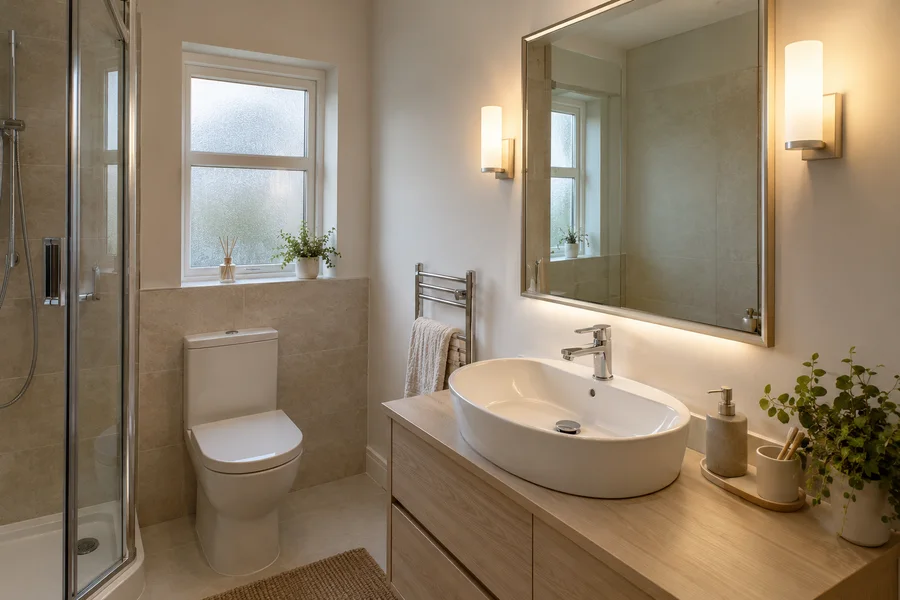
Look at reflections as well as brightness
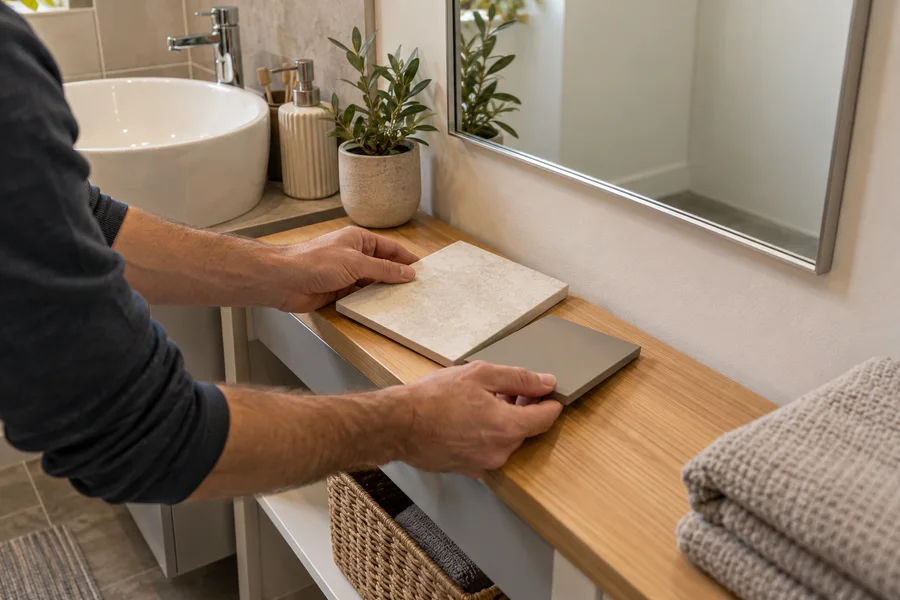
Glass screens, polished walls and mirrors can reflect a bright point of light. Look at the proposed positions from the doorway, basin and bath, not only from the centre of the ceiling plan. Explain any glare you find uncomfortable now. Surface choices matter too: compare samples in daylight and under the intended light where possible. Our wall panel and tile guide helps with the size, pattern and finish decisions that affect the room's appearance once those surfaces are beside the mirror and screen.
Choose controls around the household routine
Discuss which lights operate together and whether separate mirror lighting would be useful. Explain if an en-suite is used while someone sleeps nearby or if a control is difficult to reach. Ask what is suitable for the room rather than decide a switch position from preference alone. Keep the operation understandable: the household should know what each control does. The appropriate professional must assess the electrical arrangement. A useful design is one that supports the routine without creating a collection of features that nobody knows how to use.
Check every electrical product for the actual room
Include illuminated mirrors, fans, shaver points and any other proposed electrical products in the early discussion. Bathroom positions affect product and installation suitability, so a label saying bathroom light is not enough to settle the whole arrangement. Have the exact model and proposed position checked by the professional doing the work. Do not copy visible wiring or fittings from a design image as technical guidance. Keep product references available before ordering, including any instructions supplied by the manufacturer for the installation being considered.
Agree lighting work before surfaces are finished
We plan the mirror and agreed lighting work with the suite through our bathroom supply and installation service. The quote needs to identify the selected fittings, electrical work and any surrounding repairs or finishing included. A later mirror change can affect connections, fixings and the place where the light falls. Ask when the product choice must be final and who needs the details. Settling those points before the wall is closed is more useful than relying on a similar-looking item being easy to substitute later.
Understand replacement and care
Ask how lamps or integrated lighting parts can be repaired or replaced for the chosen product. Some arrangements need different parts or access from others. Keep the model number and care instructions, particularly for a mirror with built-in lighting. Check whether the screen or cupboard makes cleaning unnecessarily difficult. If a light later stops working, those details help you ask the supplier or installer the right question. Do not take apart electrical fittings or try a guessed replacement simply because it looks similar to the part in a product photograph.
Test the light from the positions you use
At the final check, stand at the basin and use the storage as you normally would. Operate the agreed controls and look for shadows or reflections that differ from the plan. Ask for the operation to be shown if it is unclear. A light being switched on does not by itself show how it works for the person using the mirror. Raise a concern with the installer rather than adjust the fitting yourself. Keep any agreed next step in the completion notes with the rest of the bathroom work.
Plan the light when some fittings are staying
If you are replacing only part of the bathroom, show the professional the lights and electrical fittings that will remain. A new mirror, taller cabinet or different screen can change how the existing light reaches the basin or reflects across the room. Check the combined arrangement rather than judge each new item alone. Include any proposed change to the existing lighting in the agreed work before ordering. Keeping a fitting does not remove the need to check its suitability with the revised room, and a replacement should not be chosen solely to match its appearance.
Your checklist
- Plan general and mirror tasks
- Check reflections from glass and tile
- Have the lights and wiring checked for your bathroom
- Understand controls and replacement access