
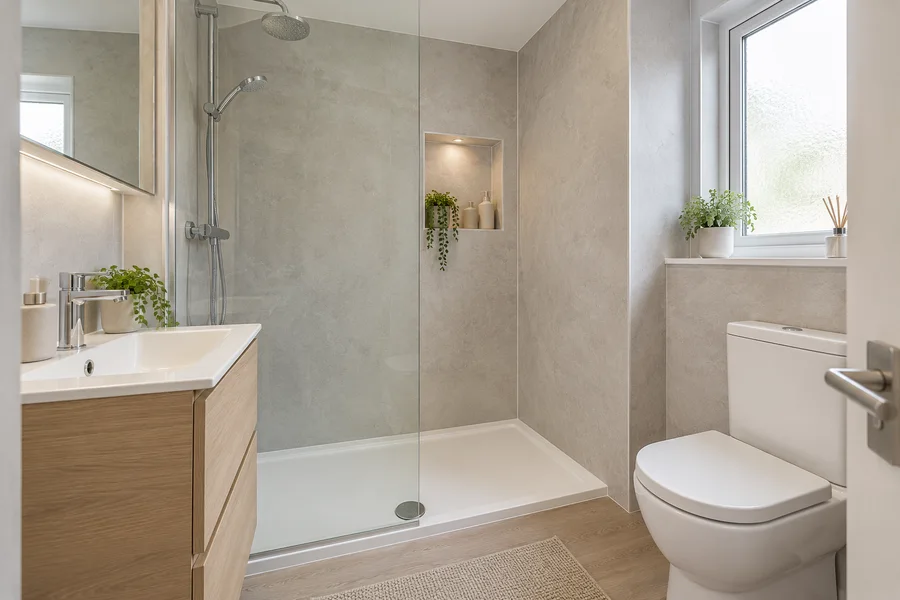
The choice between wall panels and tiles is about more than colour. Compare the complete installed finish, including the preparation behind it and how it meets the bath, shower and fittings.
Compare the complete wall finish
A tile price and a panel price do not describe the same job unless they cover the same areas and work. Include the material, backing where needed, fixings, joints, trims and seals used with the chosen product. Look at the finished wall around the shower or bath, not a small sample alone. Our bathroom supply and fitting service plans the surfaces with the suite and installation. We identify the agreed finished areas and preparation so the quote describes what is being fitted in your room.
Find out what is behind the old surface
Panels and tiles both depend on a suitable surface underneath. Existing finishes may need removing and the wall may need repair or levelling. Ask which preparation is included for the condition that can be seen. Explain any damp patches or loose areas rather than assume a new covering will solve the cause. Damage hidden during the room check may need a separate discussion after removal. Do not select a wall material on the assumption that it can simply cover every problem underneath the old bathroom.
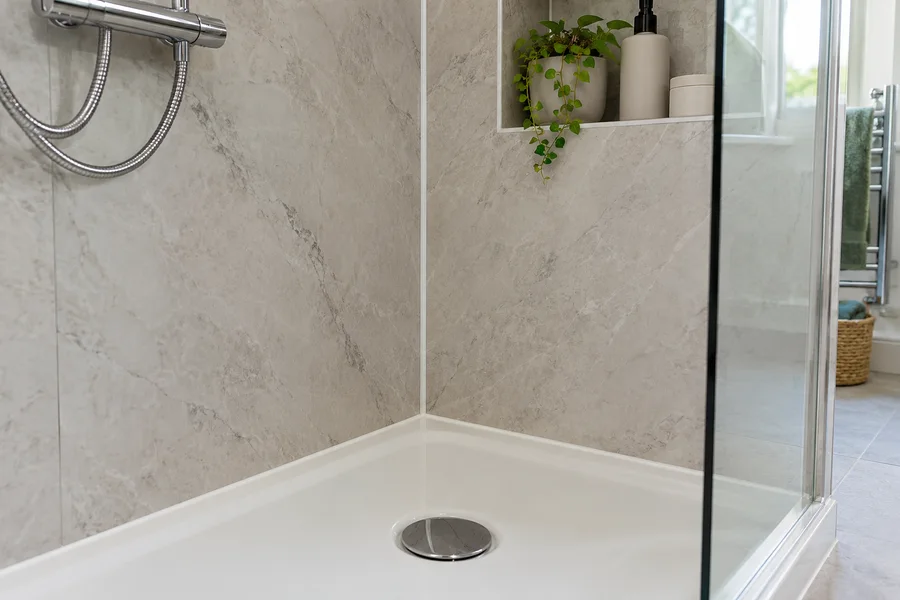
View the pattern at a useful size
A small swatch can hide how often a pattern repeats or how strong it appears across a whole wall. With tiles, the size and arrangement of joints also affect the look. Ask to see a larger example where possible and hold the wall sample upright beside the proposed furniture and floor. Look in daylight and with the bathroom light on. A finish does not need to be plain, but you should like the amount of visible pattern once the mirror, screen and basin are in front of it.
Decide where each finish starts and stops
Mark the wall area around the basin, the shower walls and the sides of any window opening. Include boxed-in pipes and the edge where a new finish meets paint or existing tiles. A half-height finish needs a clear top edge; a full wall needs the corner and ceiling details settled. These are part of the visible result rather than minor extras. When comparing bathroom costs and quotes, use those same areas so the lower price is not simply covering less of the room.
Understand joints in the wet areas
Neither a decorative panel nor a tile face tells the whole story about keeping water where it belongs. The chosen products need suitable preparation and treatment at corners, connections and the bath or tray edge. Ask the fitter to explain the system being used and its instructions without trying to design the installation yourself. Check where a joint remains accessible for routine inspection or care. Keep the product information, because cleaning and maintenance advice for one finish should not be assumed to apply to another.
Put shelves and accessories into the plan
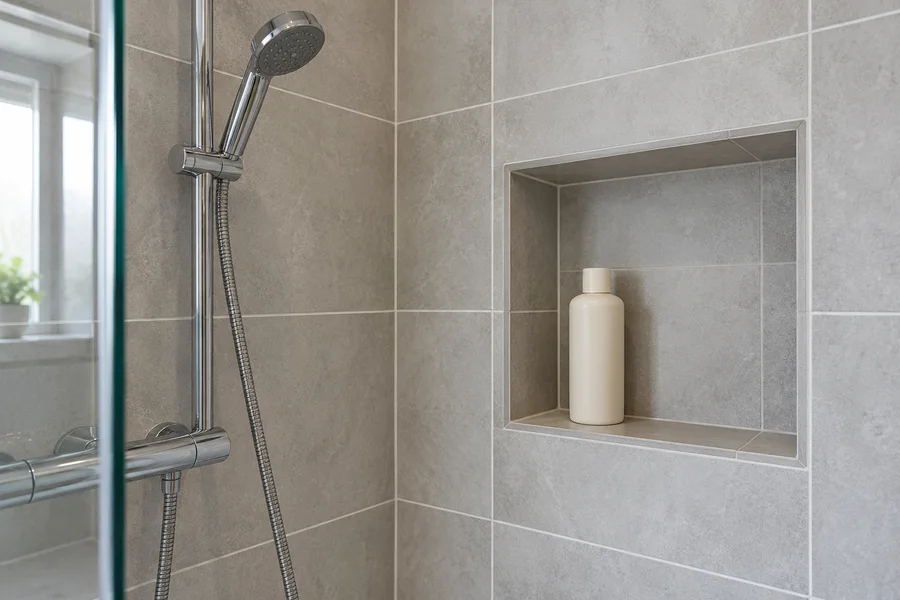
A shower basket, towel hook or mirror may need fixings through the new finish. Agree their positions while the work is being planned, especially for a shelf built into the wall. Check the depth and practical construction before assuming that every recess shown in a photograph can be copied. Look at the accessories beside screens and cupboard openings. A useful shelf should hold the bottles you use without becoming an obstruction. Once selected, give the fitter the actual product details so the preparation matches the fittings.
Keep plumbing reachable afterwards
Shower valves and pipe connections may sit behind a tidy wall finish, but they still need an agreed way to be reached when necessary. Ask where removable parts or access panels are provided and whether furniture will block them. Check what a repair could involve for the selected surface, rather than assume a smooth finish means nothing ever needs opening. At handover, keep a note of the access positions and model numbers. This helps you describe a later question without taking the bathroom apart to find out what is fitted.
Choose care you can keep up with
Ask which cleaners suit the panel, tile, grout and seals you are choosing. There may be different care instructions for different surfaces in one room. Check how you can reach the shower corners and the wall beside furniture, not just how easy the material looks to wipe in an open display. If the room currently stays damp, use our ventilation questions alongside the surface choices. A different wall finish does not remove the need to understand moisture problems or use the room's ventilation as intended.
Keep the finish details for future repairs
Save the exact name, colour and product reference, together with any batch information supplied. Photograph the packaging label before it is discarded and keep the care notes with the bathroom documents. Ask whether spare tiles or pieces would be useful and how to store them safely. A matching range may change later, but accurate details make a replacement enquiry easier. Before accepting the work, confirm the selected finish and covered areas against the current quote so the ordered products match the room you expect to receive.
Your checklist
- Check the wall preparation, material, joints and seals
- Check the wall behind the old finish
- Review joints, corners and window details
- Read product-specific care instructions